Yin Yoga Focus: Dragon Pose
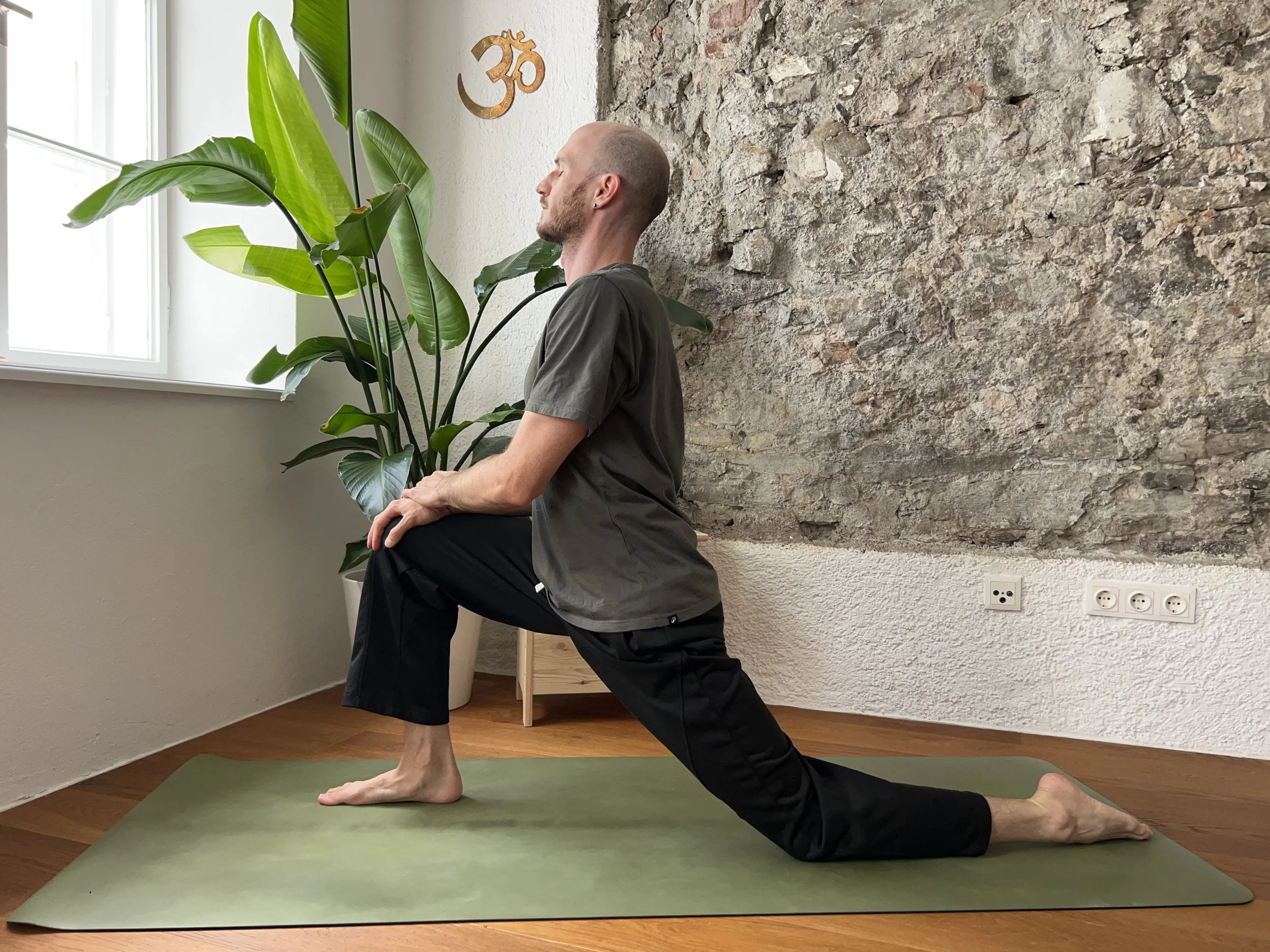
Flying High - An Option of Dragon Pose
Dragon Pose is one of the classic Yin Yoga postures for exploring the hips and groin. It creates a strong opening through the front of the hip of the back leg while also bringing the front hip into flexion.
There are many variations of Dragon, which means you can adapt the posture to explore different sensations and areas of the body.
Benefits of Dragon Pose
Dragon creates a deep opening through the hips and groin, with a particular focus on the hip flexors of the back leg.
In Yin Yoga, Dragon can help to:
Open the hips and groin
Stretch the hip flexors of the back leg
Explore mobility through the hips
Create space around the pelvis
Potentially relieve some of the muscular tension associated with sciatica
Dragon can be an intense posture, so the intention isn't to go as deep as possible. Instead, find an edge where you can breathe and remain present without forcing.
Meridians & organs
Dragon can stimulate several meridian pathways running through the legs and hips, including the Stomach, Spleen, Liver, Gallbladder and Urinary Bladder meridians.
Depending on the variation and where the body is compressed, you may also experience sensation around the kidneys or intestines.
Joints involved
Dragon involves the hips, knees, ankles and elbows, depending on the variation.
The front leg is positioned in flexion while the back leg moves into extension, creating a strong opening through the front of the back hip.
The position of the front foot and the amount of weight you place through the arms can significantly change the sensation.
How to enter Dragon Pose
Begin on all fours.
Step one foot forward and place it between your hands. Slowly begin to move the back knee further behind you, creating more space between the legs.
You can keep the hands on the floor, on blocks or bring the forearms toward the ground.
Allow the front knee to move forward only as far as feels appropriate for your body.
Once you have found your edge, become still and allow gravity to gradually deepen the sensation.
Stay for around 3–5 minutes, then slowly come out and change sides.
Variations of Dragon
Dragon has many variations, each creating a slightly different experience.
Low Dragon: Keep your hands on the floor or on blocks. This is a good place to start and allows you to control the amount of weight in the posture.
High Dragon: Lift the torso upright, creating a stronger opening through the front of the back hip.
Winged Dragon: Move the front foot slightly outward and allow the front knee to move toward the outside of the mat. This changes the sensation around the hip and groin.
Twisted Dragon: Add a gentle rotation of the torso to explore the hip and spine from a different angle.
Fire-Breathing Dragon: A more intense variation where the hands or forearms come closer to the floor and the front leg moves into a deeper position.
Overstepping Dragon: Move the front foot further forward and explore a longer stance, creating a different sensation through the hips and legs.
Dragon Split: Gradually extend the front leg while keeping the back leg extended, exploring a more split-like position.
You don't need to explore all of these variations. Choose the one that feels appropriate for your body today.
When to be careful
Dragon can place considerable stress on the knees, hips and ankles, especially in the more advanced variations.
Take care if you have existing problems affecting any of these joints. Use blocks and other props to reduce the intensity and never force the front knee or back leg into position.
If you experience sharp pain, pinching, numbness or tingling, come out of the posture and choose a gentler variation.
If you experience sciatica, Dragon may sometimes feel relieving because of the opening through the hip, but it can also aggravate symptoms depending on the cause. Move slowly and let your body's response guide you.
Finding your Dragon
Dragon is a posture where sensation can become intense very quickly.
Rather than chasing the deepest version of the pose, try to find the place where you can stay, breathe and soften.
Use props. Bend the front knee. Lift the torso. Come out of the pose if you need to.
The goal isn't to conquer the Dragon — it's to learn how to meet intensity with awareness.