Yin Yoga Focus: Frog Pose
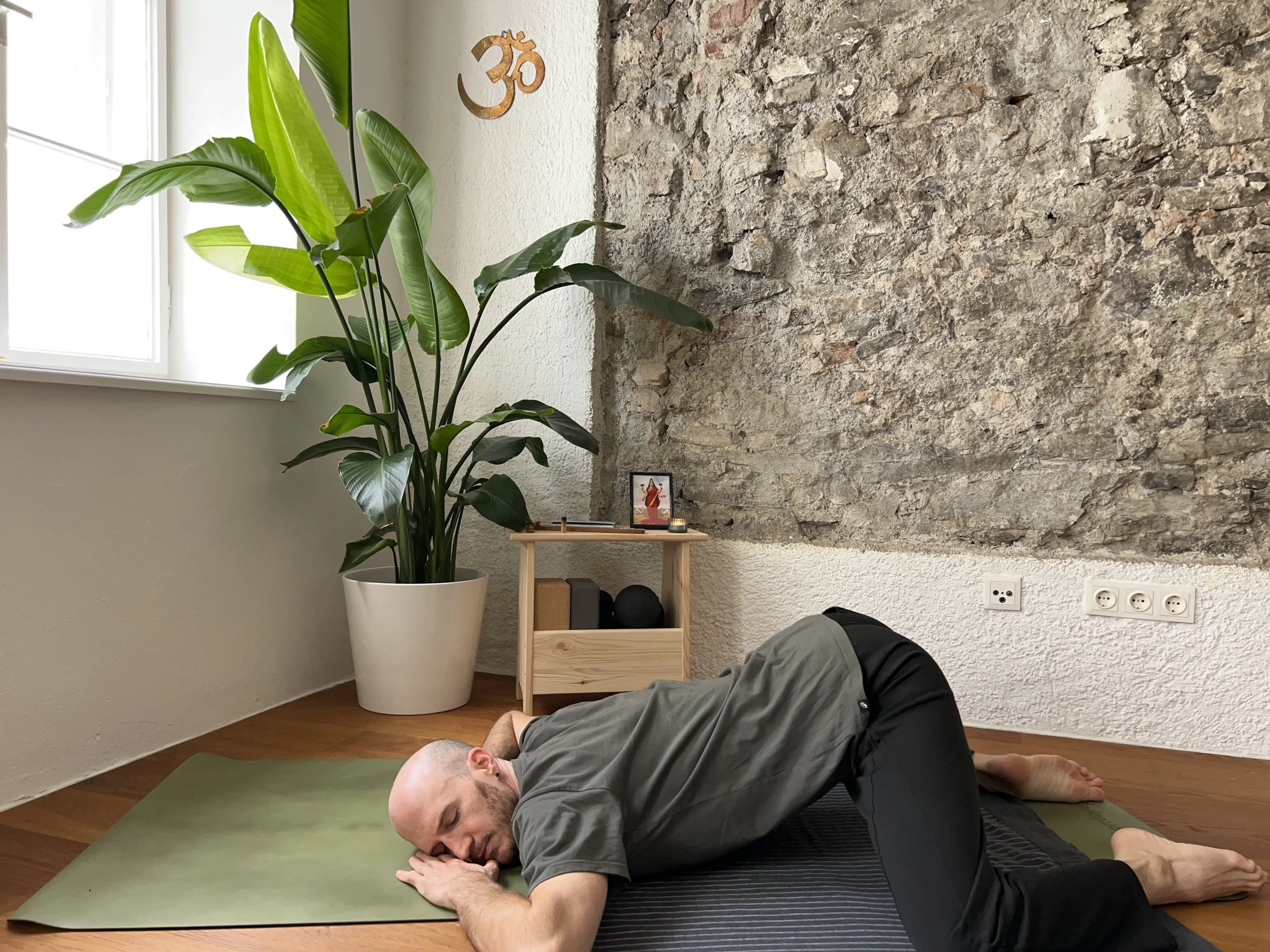
Frog Pose - Allowing the hips to open
Frog Pose, or Mandukasana in its Yin Yoga variation, is a deep hip and groin opener that targets the inner thighs and adductor muscles. It can be an intense posture, but with the right support and a gradual approach, it can also become a powerful practice of softening and surrendering.
The wide-legged position creates space through the pelvis while the upper body can remain relatively relaxed, allowing gravity to gradually deepen the sensation.
Benefits of Frog Pose
Frog creates a deep stretch through the groin and inner thighs, particularly the adductor muscles.
It also brings the spine into a gentle extension and can create space through the front of the hips and pelvis.
In Yin Yoga, Frog can help to:
Deeply open the groin and inner thighs
Stretch the adductor muscles
Create gentle extension through the spine
Release tension around the hips and pelvis
Support relaxation around the abdomen
In some traditional Yin Yoga approaches, Frog is also associated with relieving digestive and menstrual cramps. However, if you are experiencing significant pain, it's better to choose a gentler posture rather than using the pose to push through symptoms.
Meridians & organs
Frog primarily stimulates the Liver, Kidney and Spleen meridians through the inner legs.
If the arms are extended forward, the Heart and Lung meridians can also be stimulated through the inner arms.
Depending on the individual shape, there may be compression around the abdomen, which can create sensation in the area of the Spleen and Stomach. If there is compression around the lower back or sides of the body, you may also feel sensation around the kidney area.
Joints involved
Frog primarily involves the hips and knees, with the spine and shoulders also contributing to the shape.
The wide position places the hips into abduction while the knees remain bent.
Because the posture can place significant stress on the knees and hips, it is particularly important to work with your individual range of motion rather than trying to recreate the deepest version of the pose.
How to enter Frog Pose
Begin in Child's Pose with your knees wide apart.
From here, slowly lift your hips so that they come approximately in line with your knees.
Walk your hands forward and extend your arms, allowing the chest to move toward the floor.
Keep the knees wide and the feet behind you. Once you have found an appropriate edge, allow your body to become still.
Stay for around 2–5 minutes, depending on your experience and how the posture feels in your body.
Variations
There are many ways to modify Frog depending on your anatomy and the sensation you are looking for.
Bring the feet together: Instead of keeping the feet wide, bring them toward each other behind you. This changes the rotation of the hips and can make the posture feel different through the inner thighs.
Tadpole: Move the hips closer toward the heels while keeping the knees wide. This creates a more compact variation of the pose.
Bent elbows: Instead of extending the arms fully, keep the elbows bent and rest your forearms on the floor.
Hips further forward: Move the hips slightly forward of the knees to explore a stronger opening through the groin and inner thighs.
Open the arms wider: If the shoulders feel uncomfortable, move the arms further apart or allow the elbows to bend. You can also place a bolster underneath the chest for additional support.
When to be careful
Frog can be particularly demanding on the knees and hips.
If you experience discomfort in either joint, reduce the width of the legs, add support or choose another hip-opening posture.
The sensation should primarily be felt through the inner thighs and groin rather than as sharp or uncomfortable pressure in the knees.
Props are always welcome. A folded blanket underneath the knees can provide cushioning, while a bolster underneath the chest can make the posture considerably more restful.
Learning to soften into intensity
Frog is a good example of why Yin Yoga isn't about forcing ourselves into a shape.
The posture can feel intense even when we aren't doing anything. Once the legs are positioned, there is very little muscular effort required — and that gives us an opportunity to observe how we respond to intensity.
Can you soften your jaw? Relax your shoulders? Slow your breath?
Rather than fighting the sensation or trying to escape it, we can practise finding a place where intensity and ease can exist together.