Yin Yoga Focus: Supine Twist
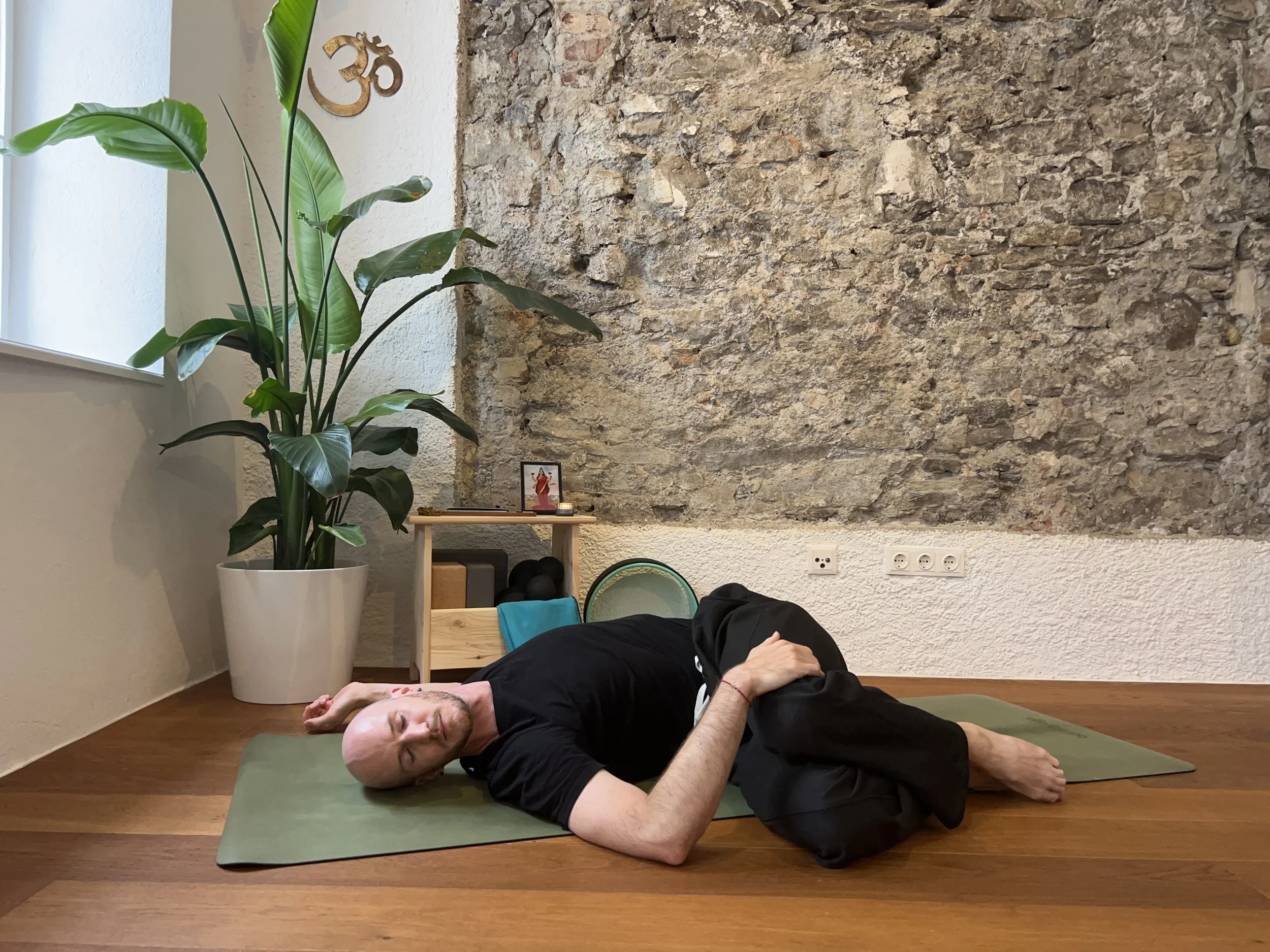
The Supine Twist can simply be a moment to integrate what came before and return to balance.
The Supine Twist is one of my favourite ways to close a Yin Yoga practice. After spending time opening and stressing different areas of the body, a gentle twist can feel like an invitation to come back to centre and find balance again.
Lying on the back also means that we don't have to work very hard to maintain the posture. Gravity does much of the work for us, allowing the spine, abdomen and breath to gradually soften.
Benefits of Supine Twist
Twists combine gentle rotation of the spine with compression through one side of the body and opening through the other.
In Yin Yoga, a Supine Twist can help to:
Gently mobilise and soften the spine
Release tension through the back and sides of the body
Create gentle compression around the abdominal organs
Encourage relaxation toward the end of a practice
Bring a sense of balance after working more intensely with the body
Twists are sometimes described as helping to "put everything back into place." Anatomically, they don't literally realign the body, but they can provide a wonderful feeling of returning to neutral and integrating the practice.
Meridians & organs
Depending on the exact variation, Supine Twists can stimulate several meridian pathways.
The rotation and opening through the sides and back of the body can affect the Gallbladder and Urinary Bladder meridians.
If you extend the arms out to the sides or overhead, you may also create gentle stimulation along meridian pathways running through the arms, including the Heart, Lung, Small Intestine and Large Intestine meridians.
The compression created through the abdomen can also gently massage the abdominal and digestive organs.
Joints involved
The main area involved in a Supine Twist is the spine, which moves into rotation.
Depending on your variation, the hips and shoulders may also be affected. Keeping the shoulders relaxed toward the floor can create an opening across the chest, while the position of the legs influences how deeply the twist is felt through the hips and lower back.
As always in Yin Yoga, there is no need to reach the deepest possible expression of the posture.
How to enter Supine Twist
Begin lying comfortably on your back.
Draw your knees toward your chest and then gently allow them to fall toward one side. Extend your arms out to the sides, creating a T-shape, or place them wherever they feel most comfortable.
You can keep your head facing toward the ceiling or, if it feels good for your neck, turn your head gently in the opposite direction of your knees.
Allow gravity to gradually draw the legs toward the floor rather than actively pushing them down.
Stay for around 3–5 minutes, then slowly return to centre and repeat on the other side.
Finding more support
If your knees don't comfortably reach the floor, place a bolster, cushion or block underneath them. Supporting the legs often makes it easier to release unnecessary muscular effort and settle into the twist.
You can also place a cushion underneath your head if the position creates tension through your neck or shoulders.
Remember that the goal isn't to get both shoulders and knees onto the floor. Your anatomy determines the shape your twist takes.
A pose for integration
There is a reason twists feel so natural toward the end of a Yin practice.
After moving through different shapes, sensations and areas of the body, we gradually begin to bring everything back together. The movement becomes quieter. The breath becomes softer.
Rather than searching for another deep stretch, the Supine Twist can simply be a moment to integrate what came before and return to balance — before finally allowing the whole body to become still.