Yin Yoga Focus: Broken Wing Pose (Open Wings)
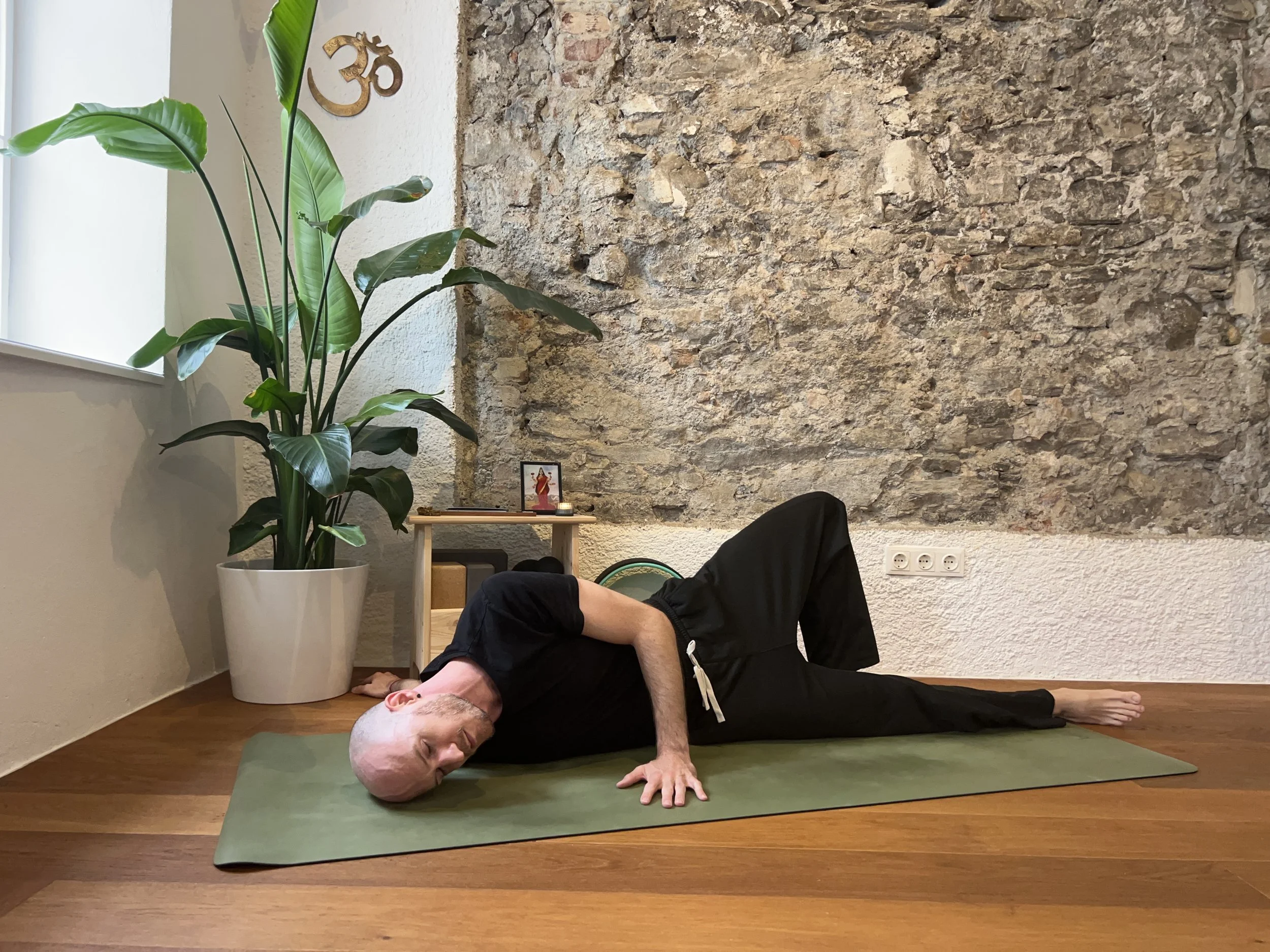
Broken Wing – a yin yoga posture to open your shoulders, open your heart
Broken Wing Pose, also known as Open Wings in Yin Yoga, is a gentle chest-opening posture that explores rotation through the upper back and creates a stretch across the front of the shoulder. Practised lying on the belly, this Yin Yoga pose invites you to open one arm out to the side and slowly roll onto your side, allowing gravity to create the stretch.
Broken Wing Pose in Yin Yoga can be adapted in several ways, depending on your shoulder mobility and the sensations you want to explore. The position of your legs and free arm can change the intensity of the twist and the opening across your chest.
As with all Yin Yoga postures, there is no need to force the body into a particular shape. Move slowly, use support when needed, and find a variation that allows you to breathe comfortably.
Benefits of Broken Wing Pose in Yin Yoga
Broken Wing Pose in Yin Yoga may offer several benefits:
Creates a stretch across the chest and the front of the shoulder.
Encourages gentle rotation through the thoracic spine, or upper back.
Explores shoulder mobility and the relationship between the shoulder and chest.
Offers an opportunity to release unnecessary muscular effort and settle into stillness.
Can be adapted to explore different sensations across the chest, shoulders and upper back.
The sensation should remain manageable throughout the posture. You do not need to roll very far onto your side to experience the stretch.
Meridians & Organs
In traditional Chinese medicine (TCM), Broken Wing Pose is commonly associated with the Heart and Lung meridiansin Yin Yoga. These meridians run through areas of the chest and arms that may be affected by the position.
Depending on the variation, the Small Intestine and Large Intestine meridians may also be included in the traditional Yin Yoga framework, particularly when the position changes the sensations around the shoulders and arms.
In TCM, the Heart is traditionally associated with the mind and emotional balance, while the Lung is associated with breathing and the capacity to let go. These are traditional energetic interpretations rather than evidence that the posture directly affects the organs or treats related conditions.
How to Enter Broken Wing Pose
Lie on your belly with your legs extended and your forehead resting on the mat.
Extend your right arm out to the side, approximately in line with your shoulder, with your palm facing down.
Keep your left hand beside your chest and slowly begin to roll onto your right side.
Allow your right shoulder and the front of your chest to open gradually. Use your left hand to control how far you roll.
Bend your knees if that feels comfortable, allowing your legs to rest towards the left side.
Find a position in which the stretch across your chest and shoulder feels steady and manageable.
Stay for 3–5 minutes, or for less time if the sensation becomes too intense.
Return to your belly slowly before practising on the other side.
Variations & Support
Broken Wing Pose offers several ways to explore the chest and shoulder opening. Choose your variation according to your comfort and mobility.
The free arm behind your back: From the basic position, bring your left arm behind your back. This changes the position of the shoulder and may create a different sensation across the chest. Only explore this option if your shoulder remains comfortable.
The free arm overhead: Extend your left arm over your head, resting it on the floor if possible. This variation can change the stretch along the side of the body and around the shoulder.
Both knees bent: Bend both knees and let your legs rest towards the side opposite to your extended arm. Adjust the angle of your hips and legs to find a comfortable degree of rotation.
One leg extended: Keep one leg straight while bending the other. This creates a different relationship between the pelvis and spine and may make the twist feel less intense.
The toes resting on the floor: Instead of allowing your legs to fall completely to one side, keep your toes in contact with the floor for more control and stability.
Using props: Place a folded blanket beneath your head or chest if you need extra support. You can also use your free hand on the floor to regulate the depth of the twist.
There is no need to combine all these variations. Small adjustments can make a significant difference, especially in a posture that places the shoulder in a vulnerable position.
Contraindications & Cautions
Broken Wing Pose requires particular care if you have shoulder pain, a shoulder injury, neck problems or a history of cervical spine issues.
Avoid pulling yourself deeper into the twist with your free arm. The extended arm should not feel trapped or forced, and you should never push through sharp pain, tingling, numbness or a pinching sensation in the shoulder or neck.
If the stretch feels too strong, roll closer to your belly, change the angle of your extended arm or leave the posture. If you are recovering from an injury, seek guidance from an appropriate healthcare professional before practising.
Remember that the goal is not to bring your shoulder closer to the floor. It is to find a position where you can remain relaxed without compromising the shoulder joint.
How to Exit Broken Wing Pose
To leave Broken Wing Pose, first bring your legs back towards the centre. Use your free hand to help you roll slowly onto your belly.
Once you are lying face down again, bring your extended arm back alongside your body. Pause for a few breaths before changing sides, allowing the shoulder to settle.
Avoid pushing yourself upright too quickly or making sudden movements through the neck and shoulder.
Counterpose: Resting on the Belly
After Broken Wing Pose, return to a neutral position by lying on your belly. Turn your head to one side and rest your arms alongside your body or bend them comfortably near your head.
Allow your breathing to return to its natural rhythm. Notice the sensations in your chest, shoulders and upper back without trying to change anything.
Broken Wing Pose in Yin Yoga reminds us that opening does not need to be forced. By approaching the posture patiently and respecting the limits of the shoulder, we can explore space and rotation while giving the body time to settle.