Yin Yoga Focus: Rolling Panda Pose
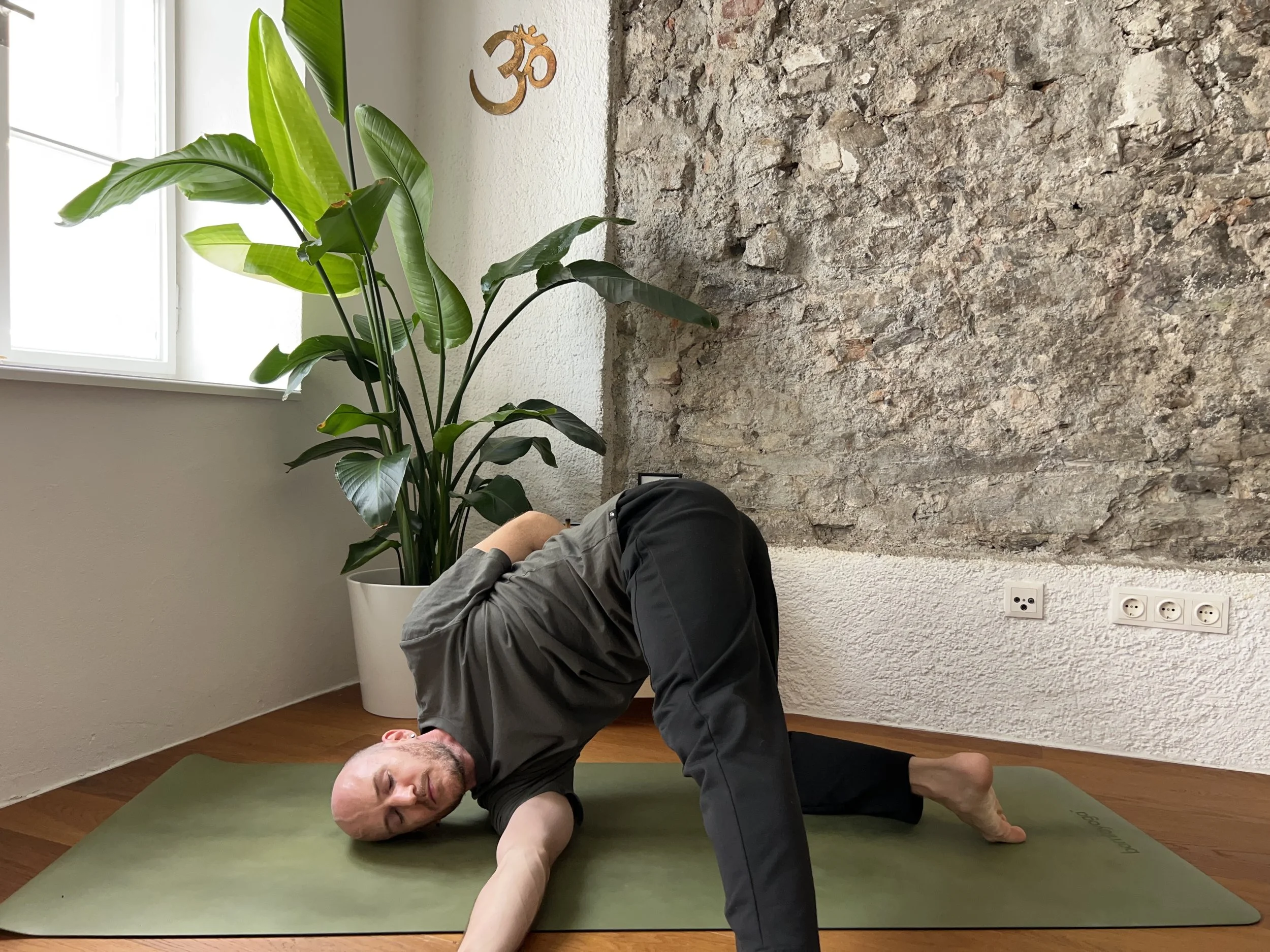
Rolling Panda – a gentle yin yoga twist
Rolling Panda Pose is a gentle Yin Yoga twist that invites you to explore rotation through the upper spine and shoulders while allowing the body to settle towards the floor. It is often practised from Tabletop Pose, with one arm threaded underneath the other, creating a soft twist and a sense of space across the upper back.
In Yin Yoga, Rolling Panda Pose can be adapted in several ways, making it a versatile posture for exploring the shoulders, chest and spine. Small changes in the position of your arms and legs can significantly change the sensations you experience.
Benefits of Rolling Panda Pose in Yin Yoga
Rolling Panda Pose in Yin Yoga may offer several benefits:
Gently explores rotation through the thoracic spine and upper back.
Encourages internal rotation of the shoulder of the threaded arm.
Creates a stretch across the shoulders and upper back.
Depending on the variation, opens different areas of the chest and side body.
Provides an opportunity to slow down, relax muscular effort and observe the breath.
As with all Yin Yoga postures, the aim is not to reach the deepest possible twist, but to find a position that allows you to remain comfortable and attentive.
Meridians & Organs
In traditional Chinese medicine (TCM), the meridian associations of Rolling Panda Pose in Yin Yoga depend on the variation and the areas of the body receiving the stretch.
The Small Intestine and Large Intestine meridians are commonly associated with the basic position because of the sensations around the shoulders, arms and upper body.
Depending on the arm position and the way the chest and sides of the body are opened, variations may also be associated with the Heart, Lung, Liver, Kidney and Spleen meridians within the traditional Yin Yoga framework.
Some variations may create a gentle sense of compression around the abdomen or chest. These are traditional energetic interpretations rather than evidence of a direct effect on the corresponding organs.
Joints Involved
Rolling Panda Pose primarily involves:
Shoulders
Thoracic spine
Cervical spine
The amount of rotation varies according to your arm position, the mobility of your shoulders and how far you allow your upper body to settle towards the floor.
How to Enter Rolling Panda Pose
Begin on all fours in Tabletop Pose, with your hands beneath your shoulders and your knees beneath your hips.
Slide your right arm underneath your left arm, reaching towards the left side.
Lower your right shoulder and the side of your head towards the mat, allowing your upper back to rotate gently.
Keep your hips approximately above your knees, adjusting their position if needed to find a comfortable twist.
Rest your left hand wherever it feels natural and allow your shoulders to soften.
Stay for 3–5 minutes, breathing calmly and avoiding any forceful rotation.
After leaving the pose, repeat on the other side, allowing yourself time to notice whether the sensations differ.
Variations & Support
One of the lovely things about Rolling Panda Pose is how easily it can be adapted. Experiment with different arm positions to explore different sensations throughout the shoulders, chest and upper back.
The top arm behind the back: From the basic position, bring your free arm behind your lower back. This variation changes the position of the shoulder and may create a different opening across the chest. Only explore it if the shoulder feels comfortable.
The top arm extended forward: Instead of leaving your free hand beside your head, stretch that arm forward along the mat. This can create a longer line through the side of the body and change the sensation around the shoulder.
The top arm overhead: Reach your free arm over your head, resting it on the floor if comfortable. This variation may create more space along the side of the ribcage.
The opposite leg extended: From the basic twist, gently extend the leg opposite to the threaded arm. For example, if your right arm is underneath your body, extend your left leg back. This creates a different relationship between the hips and upper body. Keep the movement small and stable.
Using props: Place a bolster or folded blanket beneath your shoulder and head to reduce the depth of the twist. A blanket beneath the knees can also make the starting position more comfortable.
You do not need to explore every variation in one practice. Choose the version that best suits your body on that day.
Contraindications & Cautions
Rolling Panda Pose involves a mild inversion because the head may rest below the level of the heart. Use caution or avoid this position if you have glaucoma, uncontrolled high blood pressure or a condition that makes inverted positions unsuitable for you. If you experience frequent headaches or have a medical condition affected by changes in head position, seek appropriate medical guidance before practising.
Take extra care if you have a shoulder, neck or spinal injury. Avoid forcing the arm underneath the body or pushing the shoulder towards the floor. If you feel numbness, tingling, sharp pain or pressure in the shoulder or neck, come out of the pose.
The twist should feel gentle and sustainable. More depth does not necessarily mean a better stretch.
How to Exit Rolling Panda Pose
To leave Rolling Panda Pose, first bring the free arm back from its variation and place the hand on the mat. Slowly press into the floor and lift your shoulder and torso, carefully sliding the threaded arm back out.
Return to Tabletop Pose and take a few breaths before changing sides or moving into a counterpose.
Counterposes
After Rolling Panda Pose, take some time to neutralise the spine and move gently in the opposite direction.
Cat–Cow Pose: From all fours, alternate between rounding your back and gently extending your spine, following the rhythm of your breath.
Open Wings: Lie on your stomach with one arm extended out to the side, then gently roll onto that side to explore a stretch across the chest and shoulder. Keep the movement controlled and avoid forcing the shoulder.
Rolling Panda Pose is a reminder that a small movement can create a surprisingly rich experience. Through the different variations of this Yin Yoga twist, you can explore the shoulders and spine with curiosity, allowing the body to settle without forcing it into a predetermined shape.