Yin Yoga Focus: Saddle Pose
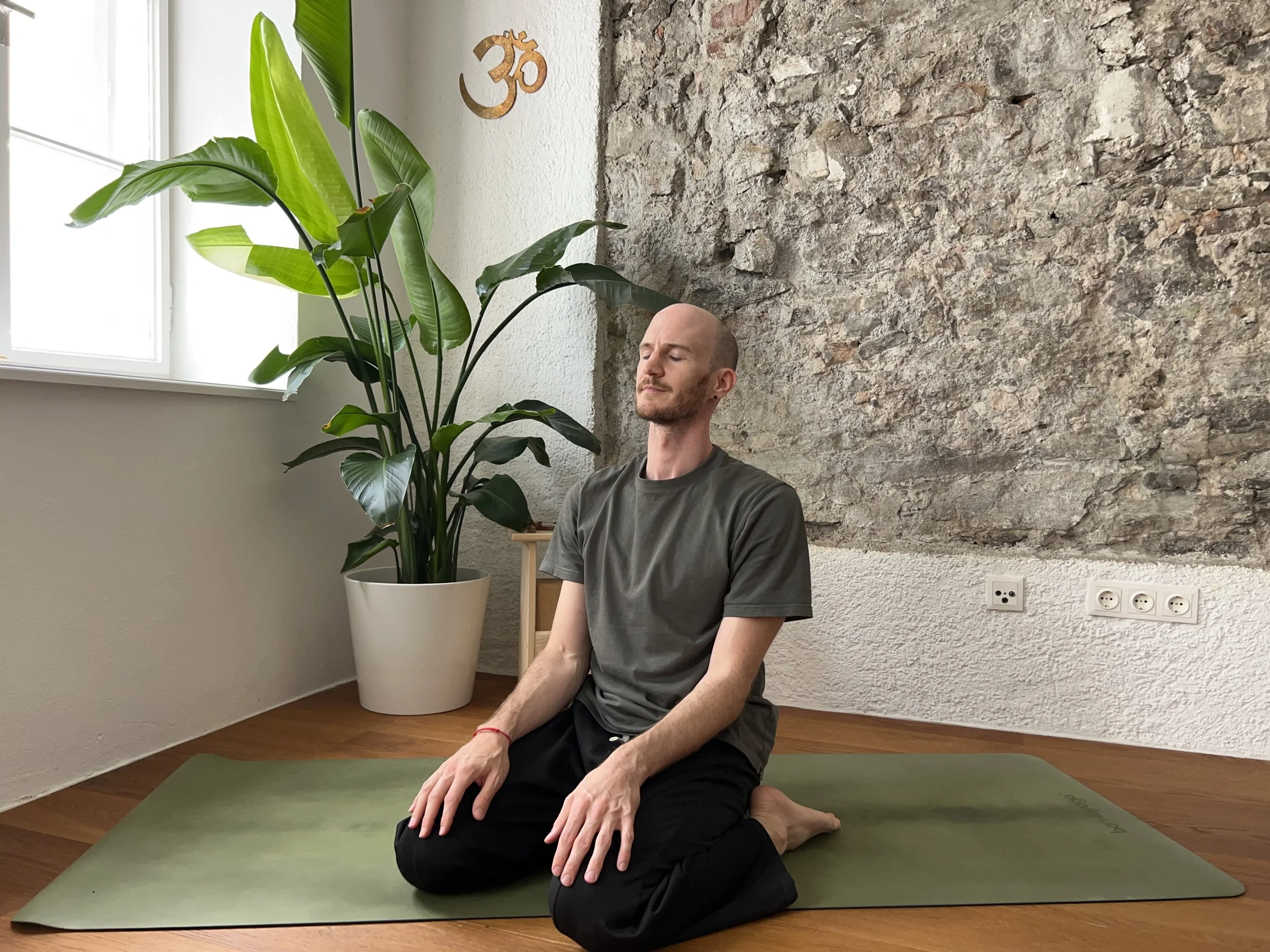
Saddle Pose - Preparing the legs for backhanding
Saddle Pose is one of the classic Yin Yoga postures for opening the front of the body. It creates a deep stretch through the quadriceps and hip flexors while bringing the spine into extension.
Unlike many backbends in more active yoga practices, the Yin version can be explored with plenty of support, allowing gravity to do much of the work. Depending on your anatomy and flexibility, Saddle can feel like a gentle opening through the thighs or a much deeper backbend.
Benefits of Saddle Pose
Saddle primarily stretches the quadriceps and hip flexors, while the knees remain bent and the hips move into a position that may include internal rotation.
In Yin Yoga, Saddle can help to:
Stretch the front of the thighs and quadriceps
Open the hip flexors
Explore internal rotation of the hips
Bring the spine into extension
Counterbalance the forward-folding positions we spend much of our day in
If the neck falls backward, the throat area opens as well. In some yoga traditions, this is associated with stimulation of the thyroid gland, although the posture has not been shown to improve thyroid function.
Meridians & organs
Saddle is traditionally associated with the Stomach and Urinary Bladder meridians.
The Stomach meridian runs along the front of the body and legs, while the Urinary Bladder meridian follows the back of the body.
Depending on the variation, there may also be pressure around the lower back and kidney area.
If you rest your upper back on a bolster, the chest can open and the ribcage can expand. This may create a feeling of space around the lungs and breath.
Joints involved
Saddle involves the ankles, knees, hips and lumbar spine.
The knees are deeply flexed, the hips move into extension, and the spine moves into extension as you lean backward.
Because this combination can be demanding, especially for the knees and lower back, it's important to adapt the posture to your own anatomy rather than aiming for a particular shape.
How to enter Saddle Pose
Begin sitting on your heels, with your knees comfortably bent and the tops of your feet resting on the floor.
Place your hands behind you for support and slowly begin to lean backward.
You can stay upright, lower yourself onto your elbows or, if your body allows it comfortably, gradually recline onto your back.
Move slowly and pay attention to the sensations in your knees, ankles and lower back. Choose a position where you feel a manageable stretch through the front of the thighs without pain or pinching.
Stay for around 1–5 minutes, depending on your experience and the variation you choose.
Variations & support
Saddle can be adapted in several ways.
Half Saddle: Keep one leg folded underneath you while extending the other leg straight in front of you. This reduces the demands on the hips and knees on the extended-leg side and allows you to explore one side at a time.
Half Saddle with one foot on the floor: Keep one leg folded underneath you and place the other foot on the floor with the knee bent. This changes the position of the hips and can offer a different sensation through the front of the body.
Supported Saddle: Place a bolster behind you and slowly recline onto it. The elevation supports your spine and reduces the depth of the backbend.
You can also place a folded blanket underneath your ankles or knees for cushioning. Remember that padding helps with pressure against the floor, but it doesn't necessarily reduce the internal stress on the knee joint.
When to be careful
Saddle can be intense, particularly for the knees, ankles and lower back.
If you have existing problems affecting these areas, choose a gentler variation or another posture. Never force your body to recline if you feel pressure or pain in the knees or pinching in the lower back.
If you experience discomfort in the knees, try a different position rather than pushing through it. If the lower back feels compressed, stay more upright or use a bolster to reduce the backbend.
Avoid letting the head fall backward if this creates discomfort in your neck. You can keep the head supported and the chin in a comfortable position.
How to come out of Saddle Pose
If you're lying back, slowly bring your attention to your arms and elbows.
Use your hands to support yourself as you gradually lift your torso back up, moving slowly until you're sitting upright.
Alternatively, if you're lying on your back, you can gently extend your legs one at a time, provided this feels comfortable.
Take your time. After holding a deep knee bend and backbend, it's worth allowing the body a moment to readjust before moving on.
Counterposes
After Saddle, you might enjoy Apanasana (Knees-to-Chest Pose) to gently flex the hips and spine.
Child's Pose offers a soft forward fold, while Windshield Wipers allow the knees to move gently from side to side.
Choose whichever feels most comfortable rather than forcing a strong counterstretch immediately.
Finding the right amount of opening
Saddle is a beautiful example of how different the same posture can look from one person to another.
For some, sitting on the heels already creates a strong stretch through the front of the thighs. Others may comfortably recline all the way onto their backs.
Neither version is better than the other.
In Yin Yoga, the intention is to find an appropriate amount of sensation, support the body where needed and give yourself time to settle. You don't need to reach the floor to experience the benefits of the practice.