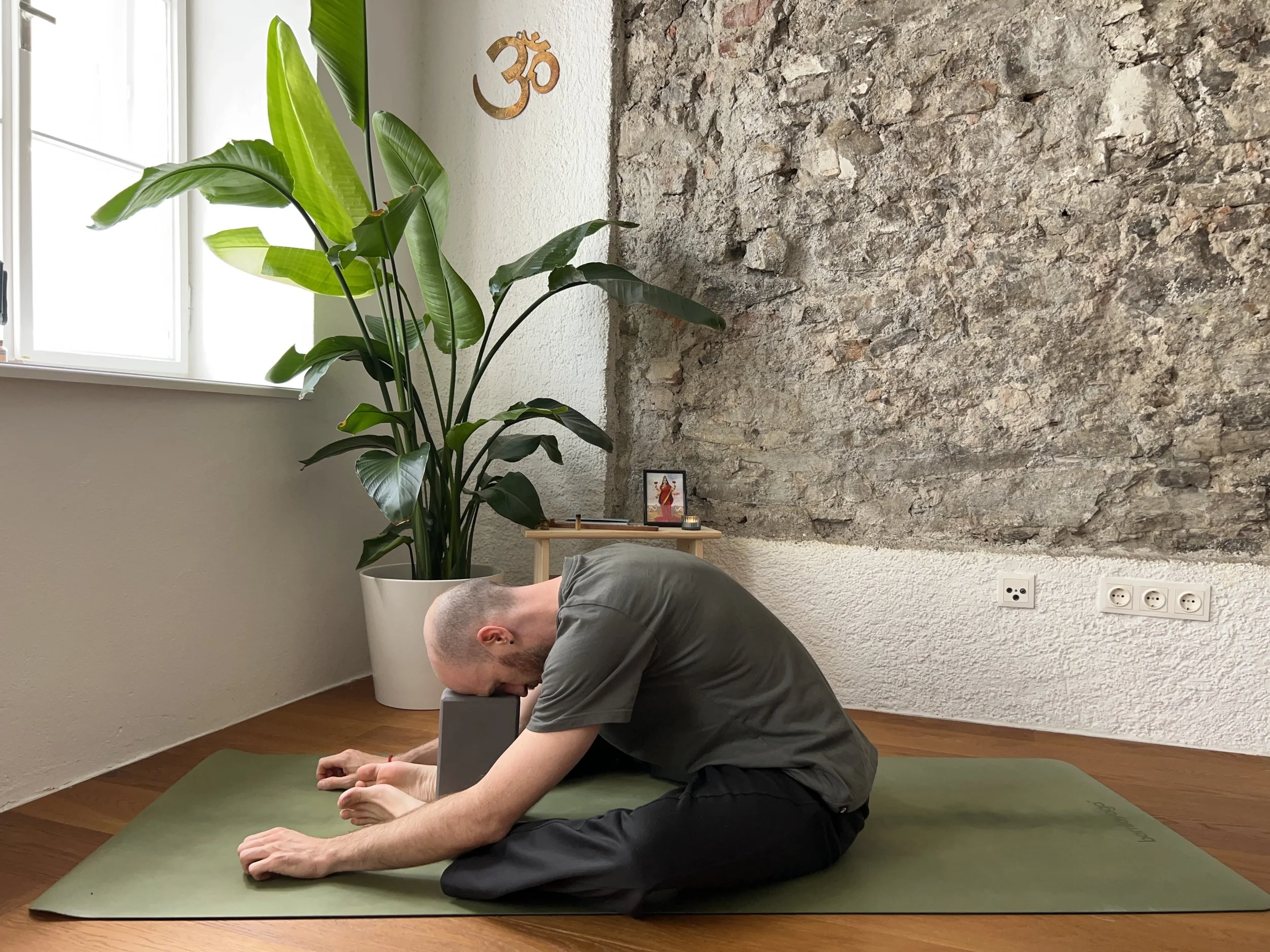
Using the block to support your head – a variation of Butterfly Pose.
Butterfly Pose is one of the classic Yin Yoga postures. It gently folds the body forward, creating space through the lower back, hips and inner legs.
Because the shape can be made very soft and supported, Butterfly is also a wonderful posture for turning inward, slowing down and allowing the nervous system to settle.
Benefits of Butterfly Pose
Butterfly creates a gentle stretch through the:
Lower back
Inner thighs and adductor muscles
Hips and groin
Back of the legs
In Traditional Chinese Medicine, Butterfly is traditionally associated with the Kidneys and Bladder and is often used in Yin practices focused on the reproductive and urinary systems.
It may be particularly supportive during practices related to the menstrual cycle and for people experiencing urinary discomfort, although Yin Yoga should not be considered a treatment for urinary or menstrual conditions.
Meridians & organs
Butterfly can stimulate several meridian pathways through the inner legs and lower body, including the Gallbladder, Liver, Kidney, Spleen and Urinary Bladder meridians.
From a TCM perspective, the posture is particularly connected with the Kidneys and Urinary Bladder.
Joints involved
Butterfly involves movement through the hips, knees and spine.
The hips move into external rotation and the knees bend outward, while the spine can gradually move into flexion as the body folds forward.
Because everyone's hip structure is different, the knees may sit much higher or lower from person to person. There is no need to force them toward the floor.
How to enter Butterfly Pose
Begin in a seated position and bring the soles of your feet together.
Allow your knees to fall naturally out to the sides. You can move your feet further away from or closer to your pelvis depending on where you feel the most comfortable sensation.
From here, allow your spine to gradually round and fold forward.
Rest your hands on the floor in front of you or on your feet.
There is no need to pull yourself down. Instead, allow the weight of your upper body to create the fold and let gravity gradually take you deeper.
Stay for around 3–5 minutes, breathing slowly and allowing the back of the body to soften.
Supporting the posture
Butterfly can be adapted in many ways.
If your hips or lower back feel tight, elevate your hips on a bolster or cushion. This can make the forward fold more accessible.
You can place a block underneath your forehead or head if your neck needs support.
If the knees feel uncomfortable, place blocks or cushions underneath the knees so the legs can relax without hanging.
For a deeply supported variation, place a bolster underneath the chest and allow your upper body to rest completely.
Supine Butterfly
You can also practise Butterfly lying on your back.
Bring the soles of your feet together and allow the knees to fall outward. Place a bolster underneath the length of your spine or underneath the upper back/heart area to gently open the front of the body.
This variation can feel especially restorative and requires very little effort from the body.
When to be careful
Butterfly isn't appropriate for everyone in its full expression.
If you experience sciatica, the forward fold may aggravate your symptoms. Take particular care if you have existing issues affecting the lower back, knees, hips or neck.
Use props to reduce the intensity and never force the knees toward the floor.
In Yin Yoga, the goal isn't to achieve a particular shape. Find the variation that allows you to experience an appropriate sensation while keeping the body supported and the breath calm.