Yin Yoga Focus: Bridge Pose
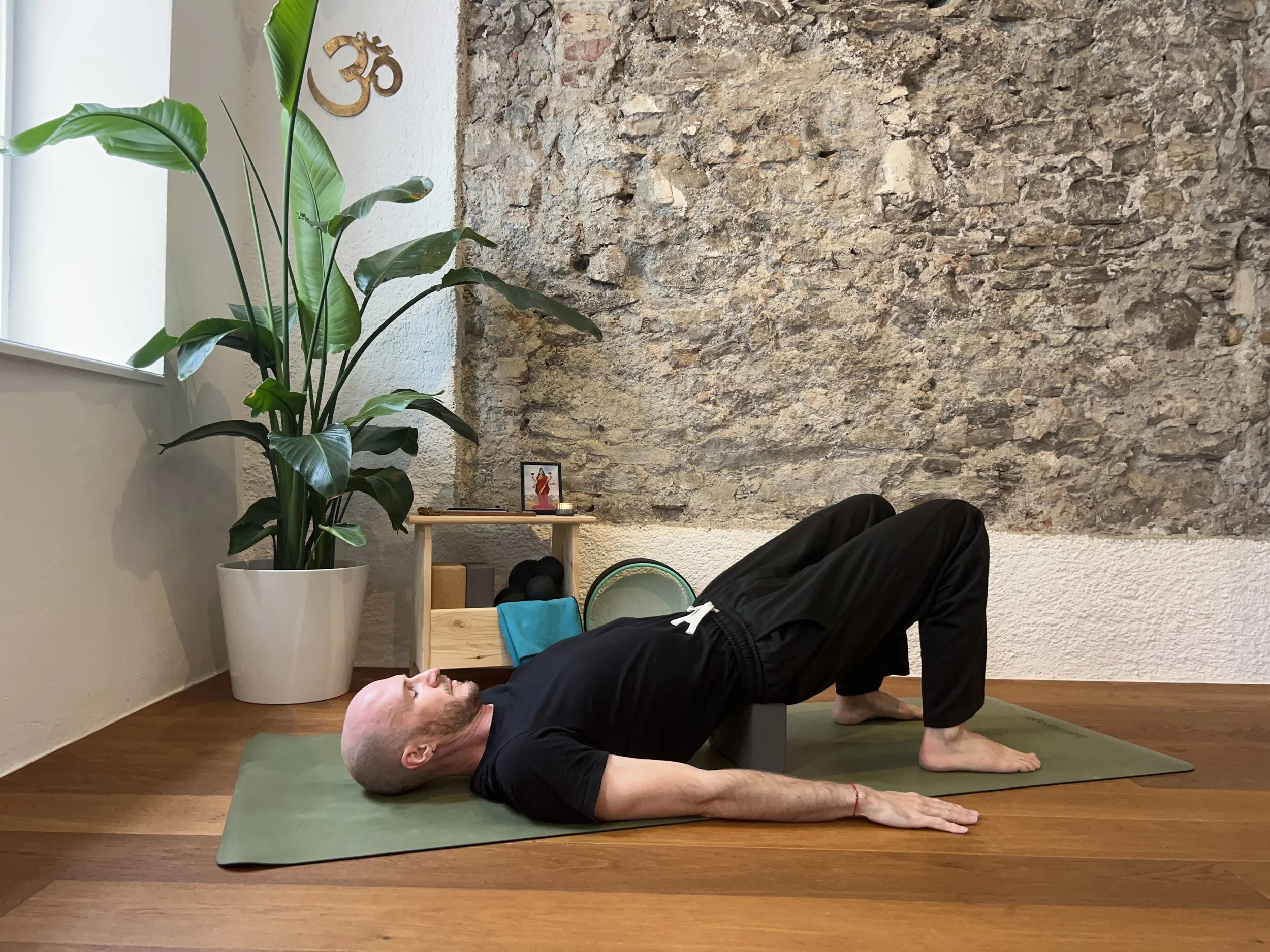
Bridge Pose - a counter posture to our flexion heavy lifestyle
Bridge Pose is a beautiful Yin Yoga posture for opening the entire front side of the body. Supported by a block underneath the sacrum, the body can gradually soften into the shape, creating space across the chest, ribcage, abdomen and front of the hips.
At the same time, the pose gently compresses the back of the body. This combination makes Bridge a wonderful counterpose to the slightly forward-bent position many of us spend much of our day in — especially if we sit at a desk for long periods of time.
Benefits of Bridge Pose
In Yin Yoga, Bridge Pose can help to:
Open the chest, ribcage and front of the shoulders
Create more space for the breath
Stretch the front of the hips and thighs, including the quadriceps
Gently extend the spine and compress the tissues of the back
Counterbalance prolonged sitting and our often flexion-heavy lifestyles
Energetically, the pose primarily stimulates the Stomach meridian along the front of the body and the Urinary Bladder meridian along the back.
Because of the opening across the chest, Bridge can also bring our awareness toward the heart and breath, making it a lovely posture when we want to explore themes of openness, spaciousness and connection.
Joints involved
Bridge Pose primarily involves:
Hips: The hips move into extension, creating a stretch through the front of the hip.
Shoulders: Depending on the position of the arms, the front of the shoulders and chest can gently open.
Knees: The knees remain flexed throughout the pose. Finding a comfortable position for the feet can help reduce unnecessary strain.
The spine is also placed into gentle extension, with the block allowing us to stay in the shape without muscular effort.
How to enter Bridge Pose
Begin lying on your back with your knees bent and the soles of your feet on the mat, approximately hip-width apart.
Press gently into your feet and lift your pelvis away from the floor. Place a yoga block horizontally underneath your sacrum — the broad, flat bone at the base of your spine — rather than underneath the lumbar spine.
Slowly allow the weight of your pelvis to settle onto the block.
You can keep your arms alongside your body or open them wider to create more space across the chest and shoulders.
Once you feel supported, allow the muscles of the legs, abdomen and back to soften as much as possible.
Stay for around 3–5 minutes, or for as long as the posture feels comfortable.
Finding the right height
The height of the block makes a big difference.
If you are new to the pose, start with the block on its lowest setting. A higher position creates more extension through the hips and spine and therefore more intensity.
In Yin Yoga, more sensation isn't necessarily better. Choose a height that allows you to remain relatively relaxed and breathe comfortably.
If you experience pinching, sharp pain or uncomfortable pressure in the lower back, come out of the pose or lower the height of the block.
Coming out of the pose
To come out, gently press into your feet and lift your pelvis just enough to remove the block.
Slowly lower your spine and pelvis back onto the mat.
Take a few moments lying on your back and notice the sensations that remain. You may want to draw your knees toward your chest or gently rock from side to side before moving on.
A counterpose to sitting
One of the reasons I particularly like Bridge Pose is its relationship to our everyday lives.
Many of us spend hours sitting: at a desk, in the car, on the sofa or looking at a screen. Over time, we become very familiar with flexion — hips bent, spine rounded and the front of the body shortened.
Bridge takes us in the opposite direction.
The hips extend, the chest opens and the entire front side of the body gets an opportunity to lengthen. Rather than actively forcing ourselves into a backbend, the support of the block allows gravity and time to do much of the work.
And that is very much the Yin approach: less effort, more time and more space to listen.